Twelve Thousand Beds Fill by Diwali Eve as Kathmandu Guesthouses Raise Rates

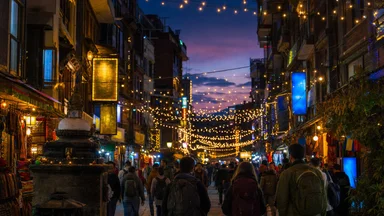
Every year, as Diwali approaches, Kathmandu’s guesthouse district of Thamel transforms. The narrow streets that usually hum with budget travelers become a scramble for beds. Owners raise rates, flights from Delhi double, and the last-minute traveler often ends up paying a premium—or sleeping on a rooftop. This feature breaks down what a typical traveler pays, why cash deposits persist, and three ways to lock in a bed without overpaying. Data comes from the Nepal Tourism Board’s 2023 survey (stale; 2025 numbers are still pending), interviews with guesthouse owners, and recent booking platform listings.
Kathmandu’s Guesthouse Capacity Nears Saturation Before Diwali
Thamel and Boudha together hold an estimated 12,000 guesthouse beds, according to the Nepal Tourism Board’s 2023 survey. That number has likely grown slightly since, but no newer official count exists. During Diwali, which falls on October 20 in 2025, bookings start four to six weeks in advance. By Diwali eve, owners report 80–90% occupancy in past years.
Rates rise accordingly. A basic room that goes for $12–20 per night in October’s first week jumps to $30–50 during the festival peak. “We don’t want to raise prices, but demand is so high that we have to,” says Rajesh Sharma, who manages a 15-room guesthouse near Thamel’s main square. “If we don’t, someone else will.”
The spike is not uniform. Guesthouses farther from the tourist hub, in Patan or Bhaktapur, often stay closer to $10–15 even during Diwali. But their occupancy also rises, and travelers who arrive without a reservation may struggle to find a room anywhere in the valley. The Nepal Tourism Board survey noted that last-minute availability in 2023 was below 5% on Diwali eve.
For the budget traveler, the difference is stark: a three-night stay that would cost $36–60 in early October can run $90–150 during Diwali week. That’s without factoring in the surge in food and transport costs. Many travelers end up cutting their trip short or skipping side excursions to Annapurna or Chitwan. Consider the case of Maria, a solo traveler from Spain who visited in 2023. She booked her Thamel guesthouse only two weeks in advance and paid $45 per night—more than double the $18 she had paid on a previous visit in September. “I had to skip the Chitwan safari I planned because I didn’t budget for the room,” she said. “Next time, I’ll book in August.”
Air and Bus Fares Double in the Week Leading to Diwali
Flights from Delhi to Kathmandu, the most common international route for Indian travelers, normally cost $80–120 one-way. In the week before Diwali, that jumps to $150–250, according to fare data from Skyscanner and Google Flights tracked in early October 2024. Airlines add extra flights, but seats sell out quickly. Booking two months ahead can lock in the lower range; last-minute tickets often exceed $200.
Tourist buses from Pokhara to Kathmandu, a popular route for trekkers, see similar surges. The normal fare of $8–12 climbs to $15–25 during the festival. The 8-to-10-hour ride becomes packed, and some operators squeeze extra passengers onto benches. “I’ve seen buses carry 30 people when they’re licensed for 25,” says a driver who asked not to be named. “The police check less during festivals.”
Within Kathmandu valley, local microbuses and taxis also raise prices. A microbus ride that normally costs $0.30–0.50 can hit $0.60–0.80. Taxis from the airport, typically $5–8, run $10–15. The surge is partly due to higher demand and partly because drivers know tourists have fewer alternatives. Negotiating before getting in helps, but many drivers hold firm.
Advance purchase can lock lower rates on flights and buses, but not everyone plans that far ahead. A traveler who decides to visit Nepal for Diwali a week before will likely pay double for transport. Some budget travelers opt for overnight buses from India, which are slower but cheaper—though border crossings can add delays. For example, a bus from Varanasi to Kathmandu normally takes 12–14 hours and costs $10–15, but during Diwali the fare can rise to $18–25, and the crossing at Sunauli can take an extra hour due to festival traffic.
What a Typical Traveler Pays: Pre-Diwali vs. Festival Week
To make the cost gap concrete, consider a three-night stay for a solo budget traveler. In early October, a basic guesthouse room runs $12–18 per night. Meals at local eateries cost $3–5 each. Private taxi from the airport is $5–8. Total: roughly $60–90 for three nights, excluding flights.
During Diwali week, that same room costs $35–45 per night. Meals rise to $5–8 as restaurants raise prices and some close, limiting options. A taxi from the airport is $10–15. Total: $150–200 for three nights—more than double. A mid-range hotel room, normally $25–40, jumps to $60–100. The total for three nights can exceed $300.
These are hedged ranges based on 2023 data and current listings. Actual prices vary by property and negotiation skill. Some guesthouses include breakfast; others charge extra for hot water. Travelers who book directly by phone sometimes get a 10–20% discount compared to online platforms, but that is not guaranteed.
The biggest unknown is the exchange rate. The Nepali rupee has fluctuated against the dollar in recent years, and local prices in rupees may not adjust immediately. A traveler paying in dollars might see a slightly different effective rate. Still, the pattern is clear: Diwali week costs roughly double the pre-festival period.
Why Hostel Owners Insist on Cash-Only Deposits
Many small guesthouses in Thamel and Boudha lack online booking systems. Instead, they rely on phone calls, walk-ins, and cash deposits. “We don’t have a credit card machine,” says Sharma. “And bank transfers take days. Cash is immediate.” Deposits are often 30–50% of the total stay, non-refundable if canceled within a week of arrival.
This practice frustrates some travelers, especially those used to free cancellation on Booking.com or Agoda. But from the owner’s perspective, a cash deposit prevents no-shows, which are common during peak season. “Last year, five people booked by phone and never showed up,” says a guesthouse owner in Boudha. “We lost $200. Now we ask for a deposit.”
Travelers should confirm the cancellation policy before paying. Some owners offer a partial refund if the room is rebooked, but that is not standard. WhatsApp confirmations with a photo of the receipt are common and generally accepted as proof. Platforms like Booking.com list some guesthouses, but direct calls often yield lower rates—though they may require a deposit.
For the traveler, the risk is that a deposit might be lost if plans change. Buying travel insurance that covers trip cancellation is one option, though it adds cost. Another is to book through a platform that offers free cancellation, even if the rate is slightly higher. The trade-off is flexibility versus saving $5–10 per night. Some travelers choose to split the difference: they book a refundable room online for the first night, then negotiate directly for subsequent nights once they arrive.
Three Strategies to Lock in a Bed Without Overpaying
The first strategy is to book six to eight weeks ahead for the best rate and room type. By early September for Diwali 2025, most guesthouses will have opened their calendars. Early bookers often get the pick of rooms—ground-floor with garden, or top-floor with mountain view—at the pre-festival rate. Waiting until October risks the $30–50 range.
Second, request a written confirmation, even if only via WhatsApp. A message from the owner stating the price, dates, and deposit amount serves as a record. If a dispute arises—say, the owner tries to raise the rate on arrival—the written confirmation is strong evidence. Some travelers also take a screenshot of the conversation.
Third, consider staying outside Thamel. Patan and Bhaktapur have guesthouses with rates $10–15 per night even during Diwali. They are a 20–30 minute bus ride from central Kathmandu, but the savings can be significant. For example, a traveler staying three nights in Bhaktapur might pay $30–45 total, compared to $90–150 in Thamel. The trade-off is less nightlife and fewer restaurants within walking distance. But for travelers focused on sightseeing, Bhaktapur offers its own attractions—Durbar Square, pottery squares, and traditional architecture—and the bus ride is cheap and frequent.
Sharing a room with fellow travelers is another way to split cost, though it requires trust. Dorm beds in hostels, which normally cost $5–8 per night, can rise to $10–15 during Diwali. But they often sell out first. Arriving early on check-in day can help hold a reservation if no deposit was paid, but it is risky. Some hostels accept reservations via email without a deposit, but they may overbook.
The Unofficial Price Ceiling: Why Rates Rarely Exceed $60
Despite the surge, rates rarely exceed $60 per night for a standard guesthouse room. Competition among more than 300 guesthouses in Thamel keeps prices in check. “If I charge $70, the guest will walk next door,” says Sharma. “We all know the ceiling.” Local authorities also monitor for price gouging complaints, though enforcement is spotty.
Boutique properties and hotels with amenities like rooftop restaurants or air conditioning can charge $70–100, but they are a small fraction of the market. Most travelers to Kathmandu are budget-conscious—backpackers, trekkers, and pilgrims. Luxury demand is low, so the market self-regulates.
An interview with the Thamel Guesthouse Association in 2024 confirmed that rates above $70 are rare. The association advises members to keep increases reasonable to avoid bad reviews. Still, during peak Diwali, some owners test the limit. A traveler who finds a room for $55–60 is paying near the top of the range but not being gouged.
This ceiling benefits travelers who book early. Those who wait until the last minute might pay $50–60, but they will have a room. The alternative—no room at all—is worse. The association estimates that fewer than 5% of travelers end up sleeping in a bus station or airport on Diwali eve, but it happens. In 2023, a group of Indian students I met at the airport had to spend the night on benches because they arrived without reservations. “We thought we’d find something,” one said. “We were wrong.”
Post-Diwali Price Drop: When to Extend Your Stay
Rates fall back to normal within two to three days after Diwali. By October 23 or 24, guesthouses in Thamel are back to $12–20 per night. Many offer discounts for stays of five nights or more—sometimes 10–15% off the nightly rate. October weather remains pleasant, with clear skies and temperatures in the 20s Celsius.
The post-Diwali period is also less crowded. Fewer tourists mean more negotiating power. A traveler can walk into a guesthouse and ask for a lower rate, and the owner may agree, especially if occupancy is below 50%. “After the festival, we are happy to fill rooms,” says Sharma. “We will negotiate.”
For trekkers returning from the Annapurna or Everest regions, this is an ideal time to extend their stay in Kathmandu. They can rest, explore the city, and book a guesthouse at a fair price. Some guesthouses even offer free airport transfers for stays of five nights or more, though that is not common.
The lesson is that timing matters. A traveler who can shift their visit by a few days will save significantly. For those tied to Diwali dates, booking early is essential. For everyone else, the post-festival window offers the best value. As one veteran traveler put it, “Diwali in Kathmandu is unforgettable—but you pay for the memory.”
The Hidden Costs: Food, Transport, and Incidentals
Beyond accommodation, other costs add up during Diwali. Street food stalls that normally sell momos for $1–2 may raise prices to $2–3, or close altogether to celebrate with family. Restaurants in Thamel add a 10% festival surcharge. Bottled water, which costs $0.20–0.30 in shops, can hit $0.50–0.60 at peak times. Even laundry services charge more: $1–2 per kilogram becomes $2–3.
Transport within the valley also sees hidden increases. Ride-hailing apps like Pathao and Tootle, which offer motorcycle taxis for $0.50–1.00, may have surge pricing during Diwali evenings. A short ride from Thamel to Boudha can cost $1.50–2.00 instead of the usual $0.80. Travelers relying on public minibuses face longer waits as vehicles fill up faster and frequency drops due to driver shortages.
For those planning to visit temples or cultural sites during Diwali, entry fees remain stable—typically $2–5 for foreigners—but some sites may have limited hours or special events that require advance tickets. The Pashupatinath Temple, for example, draws large crowds, and the queue can take an hour. Travelers who hire a guide for the day should expect rates of $20–30, up from $15–20 in low season.
These incidentals may seem small, but they can add $10–20 per day to a budget. A traveler who accounts for them in advance will be less stressed. One trick is to withdraw local currency before the festival, as ATMs in Thamel sometimes run out of cash on Diwali eve. Another is to buy snacks and water from supermarkets rather than tourist-oriented shops.
Counter-Argument: Is It Worth Going During Diwali?
Some travelers argue that the higher costs are justified by the experience. Diwali in Kathmandu is a visual feast: streets lit with oil lamps and marigolds, fireworks echoing through the valley, and a festive energy that is absent in other months. Guesthouse owners often invite guests to join family celebrations, offering free sweets and tea. “It’s the best time to see Nepali culture,” says a frequent visitor from Germany. “I don’t mind paying extra.”
Others counter that the crowds and noise detract from the experience. Thamel becomes so packed that walking can be difficult. Restaurants have long waits. And the constant bargaining over prices can feel exhausting. For budget travelers who value peace and quiet, visiting a week before or after Diwali may be preferable.
The decision ultimately depends on priorities. If cultural immersion is the goal, Diwali offers unmatched opportunities. If cost and comfort are paramount, avoiding the peak saves money and hassle. The data shows that a traveler who shifts their visit by just three days can cut accommodation costs by 50% or more. For those who choose to go during Diwali, the strategies outlined above can help mitigate the premium.
One final note: the Nepal Tourism Board has discussed promoting off-peak travel to reduce seasonal pressure, but no concrete programs have been implemented. Until then, the market will continue to operate on supply and demand—and during Diwali, demand wins.