Chiang Mai Cash Spread Wastes Three Hundred Baht per 400 Dollar ATM Draw

Chiang Mai is a city that rewards preparation. The old city moat, the mountain temples, the night bazaars—they all deliver on the postcard promise. But the gap between what a traveler expects and what they actually encounter often comes down to a handful of mundane logistics: ATM fees, SIM card pricing, luggage storage, drinking water, visa paperwork, monsoon timing, and the humble 7-Eleven toastie. Each one can cost a few hundred baht or a half-day of frustration. This article walks through the specific pitfalls a careful traveler should anticipate, with named scenarios and practical workarounds.
The Hidden Tax on Thai Baht: How ATM Fees and Exchange Spreads Eat Your Trip Budget
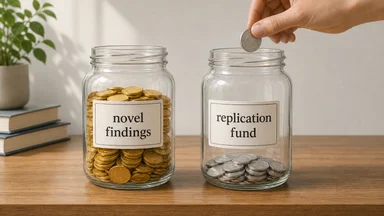
Thai ATMs charge a flat fee of 220 baht per withdrawal, regardless of the amount taken. On a 400 USD withdrawal—roughly 14,000 baht at mid-2025 rates—that fee alone represents about 1.6 percent. But the real hit comes from dynamic currency conversion, also known as DCC. When the ATM screen offers to convert the withdrawal into your home currency at the point of sale, the exchange rate typically includes a spread of 3 to 7 percent. A traveler who accepts that offer ends up losing roughly 300 baht on a 400 USD draw, combining the flat fee and the inflated rate.
Thai banks also cap single withdrawals at 30,000 baht, or around 850 USD. For anyone trying to pull a larger sum, the only option is multiple transactions—each incurring its own 220-baht fee. Some ATMs, particularly those at airports or tourist districts, add an extra 150-baht surcharge on top of the standard fee. A traveler making two withdrawals of 15,000 baht each could pay 740 baht in fees alone, which is roughly 5 percent of the total.
The simplest workaround is to bring cash from home and exchange it at a local money changer. SuperRich, a well-known chain in Chiang Mai, typically offers spreads of 1 to 2 percent on major currencies, and no transaction fee. That compares favorably to the 3 to 7 percent hit from DCC plus the 220-baht flat fee. For a two-week trip, carrying 1,000 USD in cash and exchanging it in small batches can save 500 to 700 baht compared to ATM withdrawals.
Some travelers argue that the convenience of ATMs outweighs the cost, especially for short stays. But the math is clear: a 400 USD withdrawal via ATM with DCC costs roughly 300 baht more than the same amount exchanged at a money changer. Over a month-long trip, those fees can add up to 1,500 baht or more—enough for a night in a decent guesthouse. A reasonable compromise is to use ATMs for small, emergency withdrawals and rely on cash exchanges for the bulk of spending.
SIM Cards and Water: Two 7-Eleven Essentials That Save You Money
Most travelers land at Chiang Mai International Airport and head straight for the SIM card booths in the arrivals hall. Those booths charge 200 to 300 baht for a 15-day tourist SIM from AIS or TrueMove, which includes roughly 10 GB of data and some call credit. But the same SIM can be bought at any 7-Eleven for 50 to 100 baht, depending on the promotion. The difference is markup for convenience, not product quality.
The catch is that 7-Eleven SIMs require registration with your passport, and the staff may or may not be willing to help if you don't speak Thai. Some stores near the airport are used to tourists and handle the process in a few minutes. Others, especially in residential areas, may refuse. A practical strategy is to buy a cheap SIM at the airport booth for the first day, then visit a 7-Eleven later to get a longer-term plan. The airport SIM serves as a bridge, and the 7-Eleven SIM saves 100 to 150 baht over two weeks.
Another 7-Eleven essential is drinking water. A 1.5-liter bottle costs 14 baht at 7-Eleven, compared to 40 baht or more for a small bottle in a hotel mini-bar. The hotel markup is roughly three times the retail price, and the convenience of having water in the room is not worth the premium. A traveler who buys two large bottles per day from 7-Eleven spends about 28 baht, versus 80 baht from the hotel mini-bar. Over a week, that's a saving of roughly 364 baht.
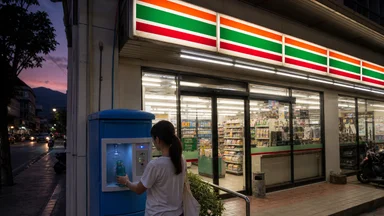
Some travelers prefer to refill their own bottles at the blue water machines found outside many 7-Eleven stores. Those machines dispense filtered water at 1 baht per 1.5 liters—a fraction of the bottled cost. But the quality of that water varies. The machines are maintained by local operators, and filters are not always changed on schedule. Reports from some travelers mention stomach issues after drinking from these machines, while others have no problems. A safer alternative is the sealed plastic bags of water sold by street stalls for 5 baht each. These are common near markets and bus stops, and they contain purified water from a factory. The bag is a single-use plastic, but the price is unbeatable. For 5 baht, a traveler gets roughly 500 milliliters—equivalent to buying a 1.5-liter bottle for 15 baht, but without the bottle waste. The bag is torn open at the corner and drunk directly, which takes some practice.
Hotel tap water in northern Thailand is not potable, even in upscale properties. The municipal water supply contains sediment and bacteria that can cause digestive upset. Most hotels provide a complimentary bottle of water in the room, but it is often a small 500-milliliter bottle, and replenishment may cost extra. A traveler who relies on hotel water will spend 20 to 40 baht per day, depending on consumption.
The most practical approach is to buy a 1.5-liter bottle from 7-Eleven for 14 baht and refill it at the hotel's water dispenser if one is available. Many guesthouses in Chiang Mai have a large water cooler in the lobby where guests can fill their bottles for free. This combines the safety of sealed water with the economy of refilling. A traveler who does this spends roughly 14 baht per day for the first bottle, then nothing for refills—a total of around 100 baht for a week.
The Bag Drop That Costs You a Day: Chiang Mai's Luggage Storage Blind Spot
Chiang Mai's train station has a luggage storage room with lockers, but they fill up quickly, especially during peak season and around holidays. By late morning, most lockers are taken, and the station staff do not hold bags at the counter. Travelers arriving on an overnight train from Bangkok often find themselves carrying their luggage through the old city until their guesthouse allows early check-in, which may not be until 2 p.m.
The airport left luggage office closes at 10 p.m., so anyone with a late-night flight or an early-morning arrival is out of luck. Some hotels will hold bags after checkout, but this is not guaranteed. At budget guesthouses like Green Tiger House or Baan Orapin, the front desk may offer to store bags in a corner of the lobby, but there is no secure locker. A traveler who books a late departure and wants to explore the city for a few hours after checkout may find themselves hauling a backpack through the Sunday Walking Street market.
A reliable alternative is a laundry shop. Many laundries in the old city offer bag storage for 30 to 50 baht per day. They are not advertised as luggage storage, but they have space and are used to the request. The key is to ask politely and show that the bag is not too heavy. Some shops will wrap the bag in plastic to keep it clean. This is not a service that appears on Google Maps, but it works in practice.
For travelers with a connecting bus or train the same day, the best option is to book a guesthouse that offers free luggage storage after checkout—or to stay at a hostel with a luggage room. Some hostels in the old city, like those near Thapae Gate, have secure lockers for guests even after they check out. Checking with the property before arrival can save a day of frustration. A missed connection because of luggage logistics is avoidable with a little planning.
Paperwork Pitfall: The TM.30 Reporting Rule That Can Ground Your Visa
Thailand's immigration law requires that any landlord or hotel notify the local immigration office within 24 hours of a foreigner's arrival at their address. This is done via a form called the TM.30. Hotels are generally diligent about filing it, but Airbnb hosts and private apartment owners often forget or are unaware of the requirement. A traveler who stays in an unregistered property may find that their visa extension application is rejected because the TM.30 was never filed.
The consequence can be a fine of 1,000 baht at the airport when leaving the country, or worse—a refusal to process a visa extension, forcing the traveler to leave Thailand and re-enter. This is not a rare occurrence. In 2024, the Chiang Mai immigration office reported processing roughly 15,000 visa extensions per month, and a notable share were delayed due to missing TM.30 filings. Travelers on tourist visas who plan to stay more than 30 days should check with their host before arrival to confirm that the TM.30 will be filed.
The rule applies to every address where a foreigner stays, even for a single night. A traveler who moves from a hotel to an Airbnb and back will need both properties to file TM.30 forms. Some hotels will refuse to file if the guest is not checking in directly from abroad—they consider the previous stay as the point of entry. This creates a chicken-and-egg situation where no one files, and the traveler is left in violation.
The workaround is to stay at a licensed hotel for the first few nights of the trip, then move to an Airbnb after the TM.30 from the hotel is confirmed. Alternatively, some travelers use a visa agent in Chiang Mai who handles the TM.30 filing for a small fee—typically 500 to 1,000 baht. The agent will file the form on behalf of the host, bypassing the need for the host to do it. This is a grey area, but it is widely practiced among long-term travelers.
Monsoon Timing: When a 20-Minute Downpour Derails Your Entire Day
Chiang Mai's monsoon season runs roughly from June through October, with August typically the wettest month. Afternoon rains start around 2 p.m. and can last one to two hours, sometimes longer. The rain is not gentle—it comes as a sudden, heavy downpour that floods streets within minutes. A traveler caught in the open will be soaked through in seconds, and the local songthaew drivers often double their fares during heavy rain, knowing that demand spikes.
Grab, the ride-hailing app, also applies surge pricing during monsoon rains. Fares can reach two to three times the normal rate for short trips within the old city. A ride that normally costs 40 baht might jump to 100 baht or more. The app does not show the surge multiplier transparently, so a traveler may only realize the cost after booking. Some travelers report paying 200 baht for a 10-minute ride during a downpour—more than the cost of a meal.
Planning around the rain is straightforward: schedule outdoor activities for the morning, when the weather is usually clear, and save indoor sights for the afternoon. The temples and markets are best visited before noon. Museums, cooking classes, and shopping malls like Central Festival are good afternoon options. The rain typically clears by early evening, so the night bazaar is still viable, though the streets may be wet.
An umbrella or a lightweight rain jacket is essential. The local markets sell cheap plastic ponchos for 20 baht, which work well but tear easily. A better investment is a compact travel umbrella that fits in a daypack. Some travelers carry a small towel to dry off after a sudden shower. The key is to accept that the rain will happen and adjust the itinerary accordingly. A 20-minute downpour should not derail an entire day, but it will if the traveler has no backup plan.
The 7-Eleven Toastie: A Cheap Meal That Beats Most Tourist Restaurants
For 29 baht, a ham and cheese toastie from 7-Eleven is one of the best value meals in Chiang Mai. The staff will heat it in a sandwich press at the counter, and it comes out hot and crispy. The ingredients are sealed and consistent—no risk of street food hygiene issues. A traveler on a budget can eat breakfast for under 30 baht, compared to 150 baht or more at a tourist cafe on Nimman Road.
7-Eleven also sells hot case meals: rice bowls with chicken or pork, curries, and noodle dishes, priced between 35 and 50 baht. These are microwaved on request and come with a plastic spoon. The quality is surprisingly good for a convenience store—the rice is fluffy, the curry has actual pieces of meat, and the portions are adequate for a small meal. A traveler who eats two 7-Eleven meals per day spends roughly 80 baht, versus 300 to 500 baht at a sit-down restaurant.
Tourist restaurants on Nimman Road and near the old city charge 150 to 250 baht for a single dish. The markup is for ambiance, service, and location, not necessarily for better ingredients. A pad thai at a street stall costs 40 baht; the same dish at a Nimman cafe costs 180 baht. The difference is roughly 140 baht, which could buy four 7-Eleven toasties. For a traveler on a tight budget, the trade-off is clear.
Some travelers argue that eating at local restaurants is part of the cultural experience, and that 7-Eleven meals are a poor substitute. That is a fair point. But for a quick breakfast or a late-night snack, the 7-Eleven toastie is hard to beat. It is not a replacement for exploring Chiang Mai's food scene—it is a tool for saving money and time when the alternative is an overpriced tourist trap. A week of breakfasts from 7-Eleven costs under 200 baht, leaving more budget for a proper dinner at a local restaurant.
Putting It All Together: Small Savings That Add Up
The pitfalls covered here—ATM fees, SIM card markups, luggage storage gaps, water costs, TM.30 paperwork, monsoon timing, and convenience store meals—each represent a modest expense or inconvenience on their own. But combined, they can easily add up to 2,000 baht or more over a two-week trip, plus a few hours of frustration. A traveler who plans ahead will avoid most of these costs without sacrificing comfort or experience.
Bringing cash from home and exchanging it at a money changer like SuperRich avoids the 300-baht hit per ATM withdrawal. Buying a SIM card at 7-Eleven instead of the airport booth saves 100 to 150 baht. Using a laundry shop for bag storage costs 30 to 50 baht per day, far less than the inconvenience of hauling luggage. Sticking to sealed 7-Eleven water bottles or refilling at a hotel dispenser keeps water costs under 100 baht per week. Confirming TM.30 filing with your host prevents visa complications. Scheduling outdoor activities in the morning avoids monsoon surge pricing and wet clothes. And a 29-baht toastie makes for a cheap, reliable breakfast.
None of these tips require extreme frugality or sacrifice. They are simply the kind of local knowledge that separates a smooth trip from a string of small annoyances. Chiang Mai remains a welcoming and affordable destination—but the traveler who masters the logistics will enjoy it far more than the one who pays the hidden tax at every turn.