Portugal's Lisbon Airport Schengen Entry Stamp Rejects Non-EU Passport Without Return Ticket

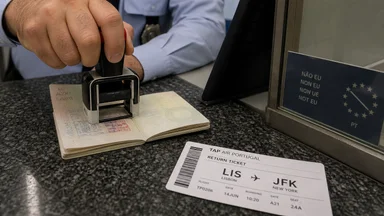
At Lisbon's Humberto Delgado Airport, the Schengen entry booths are not the welcoming gates some travellers imagine. Non-EU passport holders who arrive without a return ticket often find themselves turned around, sometimes within minutes. The rule is simple on paper: under the Schengen Borders Code, a third-country national must present evidence of onward travel. But in practice, Portugal's border officers apply this requirement with a consistency that catches many by surprise.
The Gate That Turns Travellers Around
The Schengen entry area at Lisbon airport is a narrow corridor of glass booths. Officers sit behind screens, scanning passports and asking the same few questions: purpose of visit, length of stay, accommodation. For non-EU travellers, the third question is almost always the same: "Where is your return ticket?"
Crew members from TAP Air Portugal and other carriers have described routine denials at this point. One flight attendant, speaking on condition of anonymity, recalled a Brazilian family of four who were sent back to Sao Paulo because they had only a one-way ticket and a vague plan to buy a return later. The family protested, but the officer was unmoved.
There is no appeal at the border booth. The decision is final unless the traveller can immediately produce a valid onward ticket and reapply. In practice, that means booking a flight on the spot from a phone or kiosk, then queuing again. Many travellers simply give up and accept the return flight.
The scene repeats several times a week. Officers are trained to check onward travel for every non-EU national, regardless of nationality. A valid visa is not enough if the traveller cannot show they will leave before it expires.
One notable case involved a group of Angolan students arriving for a conference. They had visas, hotel bookings, and invitation letters, but none had a return ticket. The entire group was denied entry and put on the next flight back to Luanda. The conference organizers had assumed the visas were sufficient. This misunderstanding cost the students their trip and the organizers significant fees.
Another traveller, an Indian software engineer on a business trip, was stopped despite having a valid Schengen visa and a company letter. He had planned to buy a return ticket after the project end date, which was flexible. The officer did not accept this reasoning. The engineer had to book an immediate return flight at the airport counter, paying a premium fare, and was allowed entry only after presenting the new booking. He later told a travel forum that the experience cost him roughly €300 more than a pre-planned ticket would have.
These examples illustrate a pattern: the Portuguese border agency, SEF (Servico de Estrangeiros e Fronteiras), treats the return ticket as a non-negotiable item. The officer's authority is absolute at the booth, and the traveller has no right to argue or appeal on the spot. The only recourse is to comply or be sent back.
Why Portugal Enforces the Rule Stricter Than Neighbors
Portugal has one of the higher overstay rates in the Schengen area, according to EU statistics from recent years. Some estimates put the rate near 2–3% of non-EU visitors, compared to roughly 1% in Spain. The Portuguese border agency has responded by tightening entry checks.
SEF inspectors receive specific training to verify onward travel documentation. The Schengen Borders Code allows member states to require proof of return, but Portugal applies it as a hard rule rather than a discretionary check. In Spain or Italy, an officer may wave through a traveller who explains they will buy a ticket later. In Lisbon, that explanation rarely works.
Tourists from Brazil and India are most frequently caught, but travellers from Angola, Mozambique, and other Portuguese-speaking countries also face scrutiny. The airline that flies a passenger in without a valid visa or onward ticket can be fined. TAP and other carriers therefore sometimes check documents at check-in, but they do not always catch missing return tickets.
The result is a system that punishes the unprepared. A traveller with a valid Schengen visa but no return ticket may still be denied. The officer's logic: without proof of departure, there is no guarantee the visa rules will be followed.
There is a trade-off here. Strict enforcement reduces overstays and protects Portugal's reputation within Schengen. But it also discourages spontaneous travel and hurts tourism from countries where return tickets are not always purchased in advance. Some travel agents in Brazil have complained that the rule is too rigid, arguing that many Brazilian tourists book one-way flights because they plan to travel overland through Europe and return from a different city. SEF's position is that a return ticket from any external Schengen border is acceptable, but travellers often do not know this.
Another counter-argument: the rule is inconsistently applied across Schengen. A traveller denied at Lisbon might have been admitted at Madrid or Paris with the same documents. This creates frustration and a perception of unfairness. However, Portugal's higher overstay rate gives the government justification for the stricter stance.
The Document That Saves Your Entry: Proof of Onward Travel
The single most important document for a non-EU traveller entering Portugal is proof of onward travel. This can be a printed or digital return ticket to the home country, or a ticket to a destination outside the Schengen area. A ferry booking to Madeira, which is Portuguese territory but outside Schengen for immigration purposes, has been accepted by some officers.
But officer discretion varies by shift and by mood. Some SEF inspectors accept a bus ticket to Seville, Spain, as proof of leaving Schengen. Others insist on a flight. A traveller who shows a same-day bus to Morocco may be questioned about the feasibility of that connection. The safest approach is to have a refundable flight booked, or use a throwaway ticket service that provides a real reservation that can be cancelled after entry.
Printed copies are still recommended, as phone screens can fail or lose signal. A single PDF with the flight confirmation, hotel bookings, and bank statement is more reliable than a folder of screenshots. Officers want to see the whole picture quickly.
The rule applies equally to travellers arriving by land or sea, but airport checks are the most common point of denial. At the land border with Spain, checks are less frequent, but when they happen, the same document requirements apply.
It is worth noting that the type of onward travel can affect the officer's decision. A flight to a non-Schengen European country, such as the United Kingdom or Ireland, is almost always accepted. A bus or train ticket to another Schengen country, on the other hand, does not count as leaving the zone; the traveller would still need to eventually exit. Some travellers mistakenly believe that a ticket to France or Germany satisfies the rule, but it does not — the officer wants proof of departure from the entire Schengen area, not just Portugal.
Ferries to North Africa are a grey area. Tangier Med port in Morocco is a common destination from southern Portugal. Some officers accept a ferry reservation as valid onward travel, but others may question whether the traveller actually intends to take the ferry. One traveller reported being asked to show a visa for Morocco, which he did not have, and was denied. The lesson: if you use a ferry as proof, ensure you have any required visas for the destination.
Three Common Mistakes That Get You Denied
The first mistake is showing an expired visa in a valid passport. Some travellers assume that if the passport is current, the visa can be a few days expired. Schengen rules are strict: the visa must be valid for the entire stay. An expired visa, even by one day, is grounds for denial.
The second mistake is presenting bank statements that show less than roughly €40 per day of stay. This is not a published rule, but SEF officers use it as a guideline. A traveller with €500 for a 14-day trip will likely be questioned. The officer wants to see that the visitor can support themselves without working illegally.
The third mistake is having a hotel reservation that was cancelled before travel. Some travellers book a refundable room, print the confirmation, then cancel it to save money. When the officer checks the reservation at the border, the cancellation is flagged. The traveller then has no accommodation for the full stay, which is another requirement.
A fourth mistake, though less common, is claiming "I'll buy a ticket later" at the counter. This almost never works. The officer has heard it many times and will not bend the rule. The traveller must produce a ticket before being allowed in.
Another frequent error is failing to check the visa's validity period against the intended stay. Some travellers have a visa that allows multiple entries but only a certain number of days per entry. If they overestimate the allowed days, they may be denied at the border. The Schengen 90/180-day rule is complex, and miscalculations are common. For example, a traveller who spent 60 days in Spain earlier in the year might think they have 30 days left, but if the 180-day window is not properly calculated, they could be over the limit. The officer will check this electronically and deny entry if the traveller would exceed the allowed stay.
Finally, some travellers present documents in a language the officer cannot read. While Portuguese officers are accustomed to English, a hotel confirmation in Arabic or Russian may cause delays. It is wise to have key documents translated or at least have an English version available.
What Locals Actually Do: The Overland Exit Strategy
Portuguese residents and frequent travellers have developed workarounds. One common strategy is to use the land border with Spain to reset the 90/180-day Schengen clock. A bus ride from Lisbon to Seville counts as leaving the Schengen area, and the return trip, if done the same day, can be used as proof of onward travel for the next entry.
Ferries from the Algarve to Tangier, Morocco, are another valid exit. Some travellers book a ferry ticket, enter Portugal, and never take the ferry. The officer only needs to see a reservation, not proof that the trip was completed. This is technically allowed, though it skirts the spirit of the rule.
Ryanair flights to the UK are often used as proof. A cheap flight from Lisbon to London, booked for a date within the allowed stay, satisfies the requirement. After entry, the traveller can cancel the flight or simply not take it. The risk is that if the officer checks the booking status at the border, a cancelled ticket could cause denial.
No one relies on the "I'm just visiting" story. Experienced travellers know that the officer wants a document, not a narrative. The ones who get through smoothly have a printed itinerary and a calm demeanour.
Another tactic used by some is to book a fully refundable flight and cancel it after passing through border control. This is legal as long as the reservation is valid at the time of inspection. However, some airlines impose fees on cancellations, so the traveller should read the terms carefully. A few services offer "dummy tickets" that are real reservations but expire after 24–48 hours. These cost roughly US$10–15 and are a low-risk option for travellers who are unsure of their return date.
It is also common for travellers to coordinate with friends or family outside Schengen. For example, a traveller might have a relative in the UK book a refundable flight on their behalf. The reservation is genuine at the time of entry, and the relative cancels it later. This requires trust and coordination, but it works.
How to Fix a Rejected Entry Without Losing the Trip
If an officer denies entry, the traveller should ask for a written refusal form, known in Portuguese as the formulário. This document states the reason for denial and is required for any appeal or reapplication. Without it, the traveller has no record of what went wrong.
The next step is to book a flight immediately at an airport kiosk or on a phone. If the traveller can produce a return ticket within a short time, they can reapply at the same booth. The officer may accept it, but there is no guarantee. Some officers will deny the second application simply because the traveller already tried once.
Calling the embassy of the home country can help in some cases. Embassies can issue temporary travel documents or intervene with border authorities, but they cannot force an entry. The embassy's role is limited to verifying identity and providing emergency paperwork.
Some travellers have rebooked to Faro Airport instead of Lisbon. Faro's border control is sometimes reported to be less strict, though this varies. A traveller denied at Lisbon might try again at Faro the next day, but the system shares data, so a previous denial may be flagged.
There is also the option of appealing the decision after returning home. The appeal must be filed with the Portuguese immigration authorities within a certain period, usually a few weeks. The traveller will need the formulário and any supporting documents. Success rates are low, but it can clear the record for future travel. Some travellers have reported that a successful appeal led to a warning being removed from their file, making subsequent entries easier.
Another practical step is to contact the airline that brought the traveller to Portugal. Under EU regulations, the airline is responsible for returning a denied passenger to their point of origin if the denial is due to missing documents. However, if the traveller voluntarily books a new ticket, the airline may not cover the cost. It is worth asking the airline's ground staff for assistance, as they sometimes have procedures to help passengers rebook at reduced rates.
The One Prep That Prevents 90% of Denials
The simplest preparation is to always carry a printed onward ticket, even if the trip is open-ended. Services like throwaway return tickets cost roughly US$10–15 and provide a real reservation valid for 24–48 hours. After entry, the reservation expires, and the traveller can plan the actual return later.
Using the Schengen 90/180-day calculator on the EU website before travel prevents another common pitfall. Many travellers miscalculate their allowed days and overstay unintentionally. The calculator shows exactly how many days remain.
Hotel confirmations for the full stay should be kept in a single PDF, with the addresses and phone numbers visible. A bank statement showing a balance above roughly €100 per day, or a credit card with a high limit, reassures the officer that the traveller can afford the trip.
Some travellers also carry a letter from their employer stating the return date. This is not officially required but can help in borderline cases. The goal is to present a complete package that leaves no doubt. The officer's job is to prevent overstays and illegal work. A well-prepared traveller gives them no reason to say no.
For those who travel frequently, it may be worth applying for a residence permit or a long-term visa if they plan to stay in Portugal for extended periods. This removes the need to prove onward travel each time. However, the application process is lengthy and requires documentation of income, accommodation, and purpose of stay.
Finally, travellers should be aware that the rules can change. The Schengen Borders Code is periodically updated, and individual member states can introduce temporary border controls. Checking the official SEF website or the Portuguese consulate's travel advice before departure is a good habit. A little preparation goes a long way in avoiding the frustration of a denied entry.