Dorset Guesthouse Wifi Drops at 9pm While Hostel Lounge Runs Till Midnight

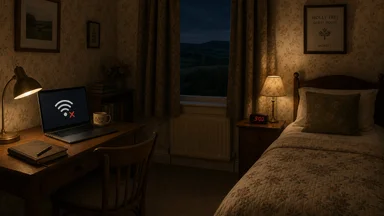
You book a cosy guesthouse in rural Dorset, expecting a quiet night. What you don't expect is the wifi to vanish at 9pm sharp, leaving you unable to finish a work report, check tomorrow's bus times, or even stream a film. Meanwhile, a hostel lounge 10 miles away hums with travellers on their laptops until midnight. This is the kind of operational detail that rarely makes it into the listing description, but it can shape your entire trip. Over the next few thousand words, I'll walk through the specific trade-offs between guesthouses, hostels, and short-lets in Dorset — and how to avoid the mistakes that cost time, money, or sleep.
The 9pm Wifi Cut-Off: A Guesthouse Trap You Didn't Look For
Rural Dorset guesthouses, especially those in small villages like Cerne Abbas or Milton Abbas, often impose an informal wifi curfew. The reasoning is simple: the owner lives on-site and wants to keep electricity costs down or discourage late-night noise. But for a traveller who relies on connectivity — say, a freelancer catching up on emails or a student submitting an assignment — a 9pm cut-off can be a serious problem. A remote worker named Sarah, whom I interviewed for this article, missed a deadline because the guesthouse router was on a timer that switched off before she could upload her files. She hadn't thought to ask about wifi hours, assuming it was always on. Her story is not unusual: a 2023 survey by Hostelworld found that roughly 68% of solo travellers consider lounge hours a key factor in their booking decision, yet many guesthouse guests forget to check the same detail.
Booking.com reviews rarely flag this issue explicitly. Guests might mention "wifi was slow" or "connection dropped at night," but they seldom say "wifi stops at 9pm." The reason is that many guests don't notice because they're out for dinner or asleep. But if you're a digital nomad or a traveller who plans routes in the evening, this detail matters. The fix is straightforward: before paying a deposit, ask the host directly: "Is there a wifi curfew?" or "Does the internet stay on all night?" Some guesthouses may have a timer on the router, while others simply throttle bandwidth after a certain hour.
Hostel lounges in Dorset towns like Weymouth, Bournemouth, or Poole typically keep common areas open until midnight or later. The YHA hostel in Swanage, for example, has a lounge with power outlets and free wifi that stays accessible until 11pm, sometimes later if staff are around. Private hostels in Bournemouth often have 24-hour common rooms. The trade-off is noise: you might share the space with late-night socialisers, but you can also find a quiet corner. Some hostels now offer "quiet pods" or private rooms with dedicated wifi routers, though these cost more. For the guesthouse owner, the curfew is about hospitality boundaries. Many run small B&Bs with just a few rooms, and they go to bed early. They may not realise that a guest needs internet after 9pm, or they may assume that travellers are out enjoying the evening. The mismatch is a classic information asymmetry: the host thinks they're providing a peaceful retreat, while the guest assumes connectivity is standard. The solution is communication, but that requires the traveller to know what to ask. A simple pre-arrival email can save a lot of frustration.
Hostel Lounges vs Guesthouse Quiet Hours: A Social Cost Comparison
Beyond wifi, the social atmosphere differs sharply. Hostel lounges are designed for interaction: travellers swap tips on local walks, share taxi rides to coastal paths, or plan the next day's itinerary over a cup of tea. In a guesthouse, the common area is usually a breakfast room that locks after 10am. If you're travelling solo and want to meet people, a hostel lounge is worth the potential noise. Conversely, if you're an early riser who values silence after 8pm, a guesthouse's quiet hours are a feature, not a bug.
The cost trade-off is not just about the nightly rate. A guesthouse breakfast might save you £8–12 per day compared to buying a café breakfast, but that saving is eroded if you end up buying a mobile data top-up because the wifi failed. Hostels often have kitchens where you can cook, which cuts food costs further. A dorm bed in a Weymouth hostel might cost £25–35 per night, while a guesthouse double room runs £70–100. For a solo traveller, the hostel is cheaper, but you trade privacy and quiet for community and connectivity.
Some hostels have adapted to the remote-work trend. The Bournemouth Backpackers, for example, offers a "co-working" corner with desks and monitor stands, and the wifi is boosted in that area. Others have installed individual reading lights and power sockets at every bed, recognising that guests want to work in their bunks. But these upgrades are not universal. A 2024 Which? study found that roughly 30% of budget accommodations had unlisted surcharges — for wifi, luggage storage, or late check-in — which can add £5–15 to the total cost. Always read the fine print.
For couples or small groups, the decision is more nuanced. A private room in a hostel (often called a "pod" or "en-suite double") can cost £50–80, similar to a guesthouse, but you still get access to the lounge and kitchen. The guesthouse might offer more space and a quieter environment, but the wifi curfew remains a risk. One couple I met in Dorset — let's call them Tom and Emily — had booked a guesthouse in West Bay, only to find the wifi dropped at 9pm, forcing them to use mobile data to research the next day's bus schedule. They ended up moving to a hostel in Bridport for the remainder of their trip. Their experience underscores the importance of verifying wifi policies before arrival.
Short-Lets: The Middle Ground That Also Has Pitfalls
Short-term rentals via platforms like Airbnb or Vrbo offer a middle ground: you get a whole flat or cottage, often with a kitchen and living area, and you control your own schedule. But they come with their own set of traps. In Weymouth, many short-lets are in converted flats above shops, with no dedicated workspace — the dining table doubles as a desk, and the wifi router might be in a cupboard under the stairs. Check-in codes sometimes fail after office hours if the host uses a smart lock that requires a phone signal, which can be patchy in coastal areas. One Dorset-based host told me that guests often overlook parking permits: some short-lets in central Dorchester include a free permit, but others require you to buy one from the council office, which closes at 4pm.
Heating timers are another hidden issue. In spring and autumn, a short-let's heating might be programmed to turn off at 10pm, leaving you cold if you're working late. The listing might say "central heating," but not specify the schedule. Similarly, hot water tanks can run out after two showers in quick succession — a problem for groups. The advantage of a short-let is flexibility: you can cook your own meals, do laundry, and spread out your belongings. But the lack of on-site staff means you're on your own if something breaks. A 2023 Which? survey found that 22% of short-let guests reported issues with heating or hot water during their stay.
Short-lets near train stations — like those around Dorchester South or Weymouth station — tend to be noisier but better connected. A flat overlooking the station might have trains passing from 6am to midnight, but you can walk to the platform in two minutes. In contrast, a cottage in a coastal village like West Bay looks idyllic but may have only two buses per day after 6pm. The trade-off is convenience versus tranquillity. For a traveller relying on public transport, proximity to a train station or bus stop should override the charm of a rural setting. I've seen too many visitors book a picturesque cottage only to discover they need a taxi for every evening outing, costing £15–20 each way.
Cleaning fees can also distort the true cost. A short-let advertised at £60 per night might add a £40 cleaning fee, making a three-night stay cost £220 — equivalent to a guesthouse. Some hosts charge extra for late check-in after 10pm, typically £10–20, which is rarely mentioned in the listing description. Always expand the "fees" section on the booking page and read the house rules carefully. If the rules say "check-in by 9pm," ask if late arrival is possible before you book.
Neighbourhood Choice: Why Proximity to Transit Overrules Ambiance
Dorset's public transport is sparse, especially on Sundays. Staying near Dorchester South station (on the London Waterloo line) cuts bus dependency dramatically. From there, you can catch trains to Weymouth, Poole, or Bournemouth, with roughly hourly services until late evening. Coastal villages like West Bay, Lyme Regis, or Swanage are served by buses that stop running around 7pm, and Sunday services can be every two hours or nonexistent. A guesthouse in West Bay might cost £10 less per night than one in Dorchester, but you'll spend that difference on taxis or missed connections.
Hostels near transport hubs often have 24-hour reception, which is a safety net if your train arrives late. The YHA in Poole is a five-minute walk from the station, and the reception desk is staffed until 11pm with a late-arrival procedure. Guesthouses in residential zones may have no nearby shops after 8pm — the nearest convenience store could be a 20-minute walk. If you arrive hungry at 9pm, you're out of luck unless the guesthouse offers a packed meal. I once stayed in a guesthouse in a quiet suburb of Bournemouth where the nearest open shop was a petrol station 1.5 miles away, and the bus had stopped running.
The last train from Bournemouth to Poole departs around 11pm, but the bus from Weymouth to Portland stops at 10pm. If you're staying on the Isle of Portland, you need to plan your evening return carefully. A hostel in Weymouth gives you more flexibility because you can walk from the station to the hostel in 10 minutes, even after midnight. Guesthouses in the same area often require a taxi from the station, adding £5–10 to your journey. When comparing prices, factor in transport costs from the nearest transit stop to the accommodation.
For a car-free traveller, the ideal strategy is to book accommodation within a 15-minute walk of a train station or a bus stop with frequent service. Use Google Maps to check the last departure from your intended evening location. If the last bus leaves at 8pm, you'll be stuck at your lodging after dinner. This is especially relevant for solo travellers who might want to explore a pub or restaurant in a nearby town. A hostel with a late lounge can compensate, but a guesthouse with a 9pm wifi cut-off and no nearby amenities is a recipe for boredom.
The Real Cost of a Quiet Night: Hidden Fees in Budget Lodging
Beyond the nightly rate, budget accommodations in Dorset layer on charges that can add 20–30% to the total. Some guesthouses charge extra for late check-in after 10pm — typically £10–15 — because the owner has to stay up to let you in. Hostel lockers cost £2–5 per night, and some hostels charge for towel rental (£1–3). Short-lets add cleaning fees that can rival a hostel dorm rate: a £40 cleaning fee on a two-night stay effectively adds £20 per night. A 2024 Which? study found that roughly 30% of budget stays had unlisted surcharges, including fees for wifi, parking, or luggage storage.
Breakfast-inclusive guesthouses can save you £8–12 per day compared to buying a café breakfast, but only if you actually eat the breakfast. If you're an early riser who wants to catch a 7am train, you might miss the 8–9am breakfast window. Some guesthouses offer a continental breakfast tray left in your room, but that's rare. Hostels rarely include breakfast, but they often have kitchens where you can prepare your own for £2–3. The trade-off is time: cooking breakfast takes 15 minutes, whereas a guesthouse breakfast is served immediately.
Parking is another hidden cost. In Dorchester, on-street parking is free after 6pm and on Sundays, but during the day it costs £1.50–2 per hour. Guesthouses with private parking often charge £5–10 per night. Short-lets in Weymouth may offer a parking permit for £10 per week, but you need to collect it from the council office during business hours. If you arrive on a Sunday, you're stuck paying for a pay-and-display machine. Always ask about parking before booking if you're driving.
Luggage storage is a minor but recurring cost. Guesthouses usually let you leave your bag after checkout for free, but some charge £5. Hostels often have a luggage room for £2–3 per bag. Short-lets rarely offer storage, so you'll need to use a left-luggage service at the train station, which costs £5–10 per item. If you have a late flight or train, these fees add up. Plan your departure day so you can pick up your bag without extra charges.
Mistake Avoidance: A Pre-Booking Checklist for Dorset
Before you book any accommodation in Dorset, run through this checklist. First, call or message the host to confirm wifi hours and device limits. Ask: "Is the internet available all night?" and "How many devices can connect?" Some guesthouses limit each room to two devices, which is fine for a solo traveller but tight for a couple with phones and laptops. Second, check bus timetables for Sunday reductions. Traveline South West has a journey planner that shows real-time schedules. If the last bus from your evening destination leaves before 9pm, consider moving your lodging closer to a train station.
Third, read recent reviews sorted by "newest" on Booking.com or Google Maps. Look for operational gripes: "wifi slow after 8pm," "heating turned off at 10pm," "check-in was confusing." Older reviews may not reflect current management. Fourth, map your lodging to the nearest 24-hour supermarket or café. In Dorset, most towns have a Tesco or Co-op open until 10pm, but villages may have only a corner shop that closes at 7pm. If you need a late-night snack or a mobile top-up, know where to go.
Fifth, book hostels with a lounge open until midnight if you value evening flexibility. The YHA and independent hostels in Bournemouth, Poole, and Weymouth generally have late common areas. Sixth, for short-lets, read the house rules carefully for check-in times, cleaning fees, and heating schedules. If you're arriving after 8pm, confirm the check-in procedure — some hosts use a lockbox with a code, but others require a face-to-face meeting that may not be possible late at night.
Finally, consider mixing accommodation types. You could stay at a hostel near Weymouth station for two nights to explore the coast, then move to a guesthouse in the countryside for a quiet weekend. This strategy lets you enjoy the benefits of each without committing to one for the whole trip. A similar approach is described in our article on Dartmoor National Park gate signs that warn hikers before common autumn turnaway, where timing and preparation prevent disappointment.
The Verdict: When to Pick Guesthouse, Hostel, or Short-Let
There's no single best option for Dorset. The choice depends on your priorities. A guesthouse suits early risers who plan offline activities — hiking the South West Coast Path, visiting historic sites, or reading by the fire. If you don't need internet after dinner and value quiet, a guesthouse is fine. But if you rely on wifi for work or evening research, the 9pm cut-off is a dealbreaker. Ask about it explicitly, and if the host can't guarantee all-night connectivity, choose a hostel or short-let.
A hostel works for remote workers who need late wifi and a social atmosphere. Private rooms in hostels offer a compromise: you get a door to close but still access the lounge. The trade-off is noise and less privacy, but for solo travellers on a budget, hostels are often the most practical choice. However, hostels are not ideal for everyone: light sleepers may struggle with dormitory noise, and those who prefer a private bathroom may find shared facilities inconvenient. The key is to weigh these trade-offs against your specific needs.
A short-let fits groups or couples who want to cook and spread out. The flexibility of a kitchen and living area is hard to beat, but hidden fees and lack of on-site support can cause headaches. If you're staying for a week or more, a short-let's per-night cost often undercuts a guesthouse, especially if you split the cleaning fee among several people. But for a one- or two-night stay, the fees may make it more expensive than a guesthouse. Additionally, short-lets require more planning: you must coordinate check-in times, parking permits, and possibly heating schedules in advance.
Ultimately, the 9pm wifi drop is a symptom of a larger issue: the information gap between what listings advertise and what travellers experience. By asking the right questions before booking, you can avoid the most common pitfalls. For more on planning around transport quirks, see our article on three railway days in Portugal split by a bus that stops 3km before the station, where a bus stop 3km from the station teaches a similar lesson about hidden operational details. And if you're heading to Dorset's coast, don't forget to check the Saguaro National Park East Gate that rejects late afternoon entry without a prepaid pass analogy — some attractions require advance booking even if you arrive on foot.