Louisiana Crawfish Festival Weekend Doubles Lafayette Hotel Rates by March Booking Gap

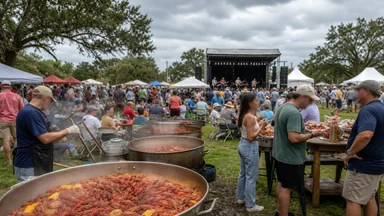
Every spring, Lafayette, Louisiana, transforms for the annual Crawfish Festival, a three-day event that draws roughly 200,000 visitors to the heart of Cajun country. The festival, which typically falls in late March, brings live music, cooking competitions, and—of course—boiling crawfish by the ton. But for travelers who wait too long to book, the weekend also brings a punishing price spike that can turn a budget trip into an expensive lesson in timing.
Hotel rates in Lafayette jump from an average of $89 a night during off-peak weekends to around $330 for festival dates, according to data from major booking platforms. The jump is not gradual; it happens in a narrow window that locals and frequent visitors call the March booking gap. By early February, most rooms are still available at reasonable rates. By March 1, many are gone or priced above $250. Understanding this gap is the key to enjoying the festival without overpaying.
Crawfish Festival Weekend Pushes Lafayette Hotel Rates Past $300 a Night
The Crawfish Festival is not a small affair. Over three days, the city hosts hundreds of thousands of visitors, many of whom come from other parts of Louisiana, Texas, and beyond. The demand for lodging far exceeds supply, and hoteliers respond by raising rates. A room at the Hampton Inn Lafayette that goes for $89 in January can cost $299 on festival weekend. The Motel 6 near I-10, normally $75, jumps to around $195.
Airbnb listings in the area triple their prices for the weekend. A typical three-night stay in the Freetown neighborhood, which might cost $350 off-peak, goes for closer to $1,000. Even budget motels along the interstate see rates double. The price surge is not limited to Lafayette proper; hotels in nearby towns like Opelousas and New Iberia also see increases, though less dramatic—typically 30 to 40 percent above their normal rates.
The phenomenon is consistent year after year. Travelers who book in November through January can still find rates in the $89–$120 range. But by February, the best deals are gone. The February lull—when booking activity slows—fools some late planners into thinking they still have time. By March 1, most rooms are either sold out or priced above $250. Orbitz promo codes, which sometimes offer 40 percent off, rarely apply to festival dates, as many hotels exclude them from discounts.
Frontier Airlines recently added new routes to Lafayette, including from Denver and Orlando, as part of its expansion after Spirit Airlines' collapse. These routes offer some relief, but the added capacity does little to lower hotel prices. The problem is not just getting to Lafayette—it is finding somewhere to sleep once you arrive.
How the March Booking Gap Creates a Last-Minute Price Spike
The March booking gap is a pattern that repeats every year. Early birds book their rooms between November and January, securing rates under $120. Then, for most of February, booking activity drops off. Travelers assume they can wait a little longer. But by the time March arrives, the remaining inventory is scarce and expensive.
Hotel revenue management systems track this pattern and adjust prices accordingly. When a hotel sees that 70 percent of its rooms are already booked by mid-February, it raises the rates on the remaining rooms to maximize revenue. The result is a classic supply-and-demand spike that catches many visitors off guard.
One local hotel manager, who asked not to be named, explained that the gap is predictable. "By Valentine's Day, we have a good sense of how the weekend will go. If bookings are strong, we raise rates. If they are weak, we hold steady. But in six years, they have never been weak." The manager added that refundable rates, which cost about $20 more per night, allow travelers to change plans if needed—a small price for flexibility.
Some travelers try to beat the system by booking through third-party sites like Orbitz or Expedia, hoping to find a deal. But as a Condé Nast Traveler article noted in July 2026, Orbitz promo codes often exclude peak dates. The same is true for most other online travel agencies. The best strategy remains booking directly with the hotel early, or looking at alternative lodging outside the city center.
Another counter-argument worth considering: some travelers argue that waiting until the last minute can yield deeply discounted rooms if hotels overestimate demand and slash prices. In practice, this rarely works for the Crawfish Festival. The event is too large and too predictable. Hotels have years of data and set their rates accordingly. A traveler who gambles on a last-minute deal in March is more likely to end up paying $300 or more—or sleeping in a car. The risk far outweighs the slim chance of a discount.
Transport Surge: Rental Cars Sell Out by Mardi Gras
Getting to Lafayette is only half the challenge. Once you arrive, moving around requires planning. Lafayette Regional Airport sees roughly 40 percent more traffic during festival weekend, according to airport officials. Rental car agencies report that their fleets are fully booked by mid-March, and sometimes as early as Mardi Gras, which falls a few weeks before the festival.
Uber and Lyft surge pricing hits 3x on Saturday night, especially around the festival grounds and downtown bars. A ride from the festival to a hotel on the south side of town can cost $25 or more. Some visitors opt for a shuttle from Baton Rouge's airport, which costs between $50 and $80 per person each way, but those shuttles also fill up quickly.
Local public buses run a limited schedule on Saturdays, with some routes ending service by 6 p.m. That leaves many visitors reliant on rideshares or their own vehicles. For those driving, parking near the festival grounds costs around $10 to $20 per day, but lots fill by late morning. A better option is to park at a remote lot and take a free shuttle, which runs every 15 to 20 minutes during peak hours.
One alternative is to stay in a town like Opelousas, about 25 minutes north of Lafayette. Hotels there are typically 30 percent cheaper, and the drive is manageable. But travelers should book a rental car early, as availability in those smaller towns is even more limited. Some visitors have resorted to using car-sharing services like Turo, but those also see price surges during the festival.
For travelers flying into Baton Rouge or New Orleans, consider the trade-off: a longer drive (about an hour from Baton Rouge, two hours from New Orleans) versus potentially cheaper flights and more rental car availability. Many visitors find that the savings on airfare offset the cost of gas and extra time. However, the drive from New Orleans on I-10 can be heavy on Friday afternoon, so plan to arrive before 3 p.m. if possible. A traveler who flew into New Orleans in 2025 reported saving $120 on the flight but spending an extra $40 on gas and $15 on tolls—a net gain of $65, though the drive added two hours each way.
What a Three-Day Crawfish Itinerary Looks Like at a Humane Pace
A well-paced three-day itinerary can make the difference between a memorable trip and a stressful one. Here is a realistic plan that avoids the common pitfalls of over scheduling.
Friday: Arrive early, check in, explore downtown. Aim to land in Lafayette by early afternoon. Check into your hotel—if you booked early, you might have paid under $150. Drop your bags and head to downtown Lafayette for a late lunch at a po'boy shop. The afternoon is good for a walk along Jefferson Street, where you can see the festival setup and catch some early music. Avoid the temptation to visit Vermilionville on the same day; it deserves its own half-day.
Saturday: Festival grounds from 10 a.m. to 5 p.m. Get to the festival by 10 a.m. to beat the crowds. The main boil tent gets crowded by noon, so aim to eat before the 2 p.m. crush. Bring sunscreen and a refillable water bottle. By 5 p.m., most people are ready for a break. Rest at the hotel before heading out for dinner at a local Cajun restaurant. Avoid the temptation to stay at the festival all day; the heat and humidity can be draining.
Sunday: Brunch, then depart. Sunday morning is a good time for a leisurely brunch at a spot like the French Press or a local po'boy joint. Then head home. If you have time, a quick stop at the Acadian Village is doable, but keep it short. The key is to leave by early afternoon to avoid traffic.
This pace leaves room for spontaneous discoveries—a roadside boiled-peanut stand, a random zydeco band playing in a park—without feeling rushed. The festival is about the food and music, not checking off a list.
For travelers who prefer a more structured schedule, consider swapping Saturday's itinerary: visit the festival in the morning, then break from noon to 3 p.m. during the hottest part of the day, and return for the evening concerts. This approach reduces fatigue and allows for a midday nap or a swim at the hotel pool. Some visitors report that the evening sets are less crowded and more enjoyable. The trade-off is missing some daytime cooking demonstrations, but the music lineup often peaks after sunset.
Booking Window: Reserve by Early February to Avoid the Spike
The single most important piece of advice for anyone planning to attend the Crawfish Festival is to book lodging by February 1. That is the sweet spot when rates are still under $150 and availability is good. Waiting until after Mardi Gras—which usually falls in February or early March—is a gamble that rarely pays off.
Refundable rates add roughly $20 per night but allow changes if your plans shift. For a three-night stay, that is $60 for peace of mind. Some hotels offer loyalty program discounts, but those are often blacked out during festival weekends. Camping at Lake Fausse Pointe State Park, about 40 minutes east of Lafayette, is a budget-friendly alternative, but sites fill by January.
If you cannot find a room in Lafayette, consider staying in Opelousas or New Iberia. Both towns are within a 25- to 30-minute drive and have hotels that are typically 30 percent cheaper. The trade-off is the daily commute and the need for a rental car. But for travelers on a tight budget, it is a worthwhile compromise.
Another option is to look for private rooms on Airbnb or VRBO in rural areas outside the city. Some hosts offer discounts for stays of three nights or more. But book early—these options also disappear quickly. As one host put it, "I get four times as many requests for that weekend as any other."
For those willing to consider more unconventional lodging, some travelers have reported success with house-sitting arrangements or swapping homes with locals who leave town during the festival. Websites like TrustedHousesitters list a handful of Lafayette-area sits each spring, but competition is fierce. A traveler who tried this in 2025 said she applied to six sits and only heard back from one—a two-night stay in a suburban home about 15 minutes from the festival grounds. The arrangement saved her roughly $400 compared to a hotel, but required her to care for two cats and a dog. The trade-off was worth it for her, but not everyone is comfortable with that responsibility.
Ground-Truth Lodging Costs: What Real Travelers Paid in 2025
To understand the real cost of the Crawfish Festival weekend, it helps to look at what actual travelers paid in 2025. The Hampton Inn Lafayette was $89 in January, but $299 on festival weekend. An Airbnb host in the Freetown neighborhood reported charging $350 for three nights off-peak, but $950 for the festival weekend. The Motel 6 near I-10, normally $75, went for $195.
A bed-and-breakfast on Jefferson Street, which typically charges $140 to $250 per night, saw rates at the top of that range. Couch-surfing hosts reported four times the usual number of requests, and many turned people away. One traveler from Texas said she paid $280 for a room that was normally $80. "I knew it would be expensive," she said, "but I didn't realize I needed to book in January."
These numbers are not outliers. They represent the market rate for a weekend when demand far exceeds supply. The lesson is clear: if you want to attend the Crawfish Festival without breaking the bank, plan early. The March booking gap is real, and it is expensive.
For similar festival-travel planning challenges, see our articles on Mont Saint-Michel causeway waits and Masaai Mara lodge capacity. Both illustrate how early booking can save money and stress.
Packing for Louisiana Humidity in Late March
Late March in Louisiana is unpredictable. Temperatures range from the low 60s to the low 80s Fahrenheit, with humidity often above 70 percent. Afternoon showers are common, sometimes sudden and heavy. Packing smart makes a difference.
Rain gear is essential. A lightweight rain jacket or a compact umbrella can save a day. Comfortable walking shoes are a must because the festival grounds are mostly grass and gravel, which get muddy after rain. Sandals are not ideal for the main area. Sunscreen and insect repellent are non-negotiable; mosquitoes are active, especially near the bayou. A cooler and a reusable cup are useful for staying hydrated—the festival has water stations, but cups are not always provided.
Layers are key. A light long-sleeve shirt can protect from the sun and the evening chill. Some visitors bring a small backpack to carry supplies. The festival allows outside food and drink in some areas, but check the rules each year. Overall, the goal is to be comfortable enough to enjoy the music and food without being distracted by the weather.
One final tip: bring cash. Many food vendors do not accept cards, and ATMs on site charge fees. Small bills make transactions faster. With the right preparation, the Crawfish Festival can be a highlight of the year—as long as you book early and pack for the humidity.
For those who plan to sample crawfish at the festival, consider bringing a small container of wet wipes or a hand sanitizer. Eating boiled crawfish is a messy affair, and the communal tables often run out of napkins by mid-afternoon. A traveler who attended in 2025 said she wished she had brought a plastic bib or an old T-shirt she didn't mind staining. The crawfish are boiled with spices that leave a residue on fingers and clothing. A little foresight can save a shirt and make the meal more enjoyable.