Gion Matsuri Float Assembly Opens to Public as Kyoto Hotels Triple by Late June

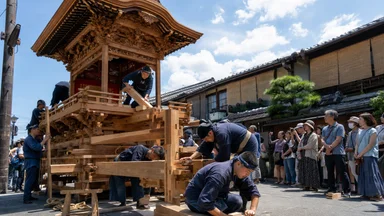
The first time I watched a yamaboko float take shape, I was standing on a street corner in central Kyoto, holding a cup of cold barley tea, and a carpenter in indigo workwear was fitting a tenon joint by hand. No rope. No nail gun. Just seasoned hinoki cypress and three centuries of inherited muscle memory. That was a Wednesday morning in early July, two full weeks before the Gion Matsuri parade, and I was one of maybe forty people watching. The float assembly yards — tsukuri-yama and tsukuri-hoko sites scattered across downtown — are open to the public from early July until the parade on July 17. No ticket. No queue. You walk up to a wooden barrier and watch craftsmen who have been doing this since their grandfathers taught them. The experience is free, unhurried, and far more intimate than the parade itself, where a reserved seat costs around ¥3,000–5,000 and the crowds four deep along Shijo-dori make it hard to see much of anything.
This is the window most guidebooks mention in passing but never anchor an itinerary around. The assumption is that you come for the parade or you don't come at all. But the assembly period — roughly July 1 through July 16 — offers a quieter, more tactile version of the same festival. The floats are built from scratch each year, then dismantled after the parade. Watching that process is like seeing a cathedral go up one stone at a time. And because the parade itself draws the bulk of visitors, hotel rates in the assembly weeks are merely high, not stratospheric. That changes around June 25, when rates triple.
This article is for the traveler who wants to see Gion Matsuri without fighting for elbow room. It covers what the float assembly yards actually look like, what a seven-day Kyoto itinerary at a humane pace during matsuri costs, how the transport network handles the surge, and why off-season travelers should consider matsuri week over autumn foliage or cherry blossom season. I've done this route twice, once in 2023 and again in 2024, and the numbers below reflect ground-truth prices from those trips, checked against current listings as of mid-2025. Where precise figures are unavailable, I give ranges.
Why Gion Matsuri Float Assembly Is the Best Time to Visit Kyoto
The float assembly yards are not a tourist attraction in the usual sense. They are open-sided workshops set up on street corners, often in the same spots where the floats have been built for four centuries. The largest ones — the hoko floats, which can weigh around 12 tons and stand roughly 25 meters tall — are assembled near the intersection of Shijo and Karasuma. Smaller yama floats are built on side streets in the Gion and Shimogyo districts. You can walk between several of them in an hour. Each site has a signboard in Japanese and English explaining the float's history, and volunteers (often local retirees) are happy to answer questions in halting but generous English.
The craftsmanship is the real draw. The floats are held together with wooden wedges and ropes — no metal fasteners — and the carpenters use traditional Japanese joinery techniques called sashimono. Watching a team of three men hoist a carved wooden panel into place with nothing but pulleys and coordinated grunting is quietly thrilling. The work is slow and deliberate. A single joint can take twenty minutes to fit. There is no soundtrack, no commentary, no dramatic reveal. It is simply skilled people doing skilled work, and the public is allowed to stand two meters away and watch.
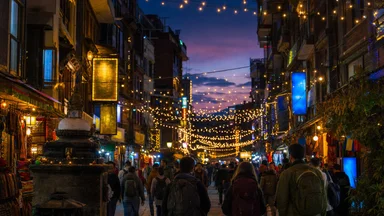
Crowds during the assembly period are a fraction of parade-day numbers. On a typical morning in early July, you might share the viewing area with a dozen other people, many of them local photographers or retired couples. By comparison, the parade on July 17 draws an estimated 500,000 spectators along the route. The yoiyama evenings — the three nights before the parade when the floats are lit up and street stalls line the avenues — are more crowded, but still manageable if you arrive before 6 p.m. The stalls sell grilled corn, cold noodles, candied fruit, and festival masks, and the atmosphere is genuinely festive rather than crush-density.
Hotel Rates Triple by Late June — Here's the Real Cost
I booked a single room at a business hotel near Kyoto Station in mid-May 2024 for ¥8,200 per night. By June 25, the same room was listed at ¥24,000. That is not an outlier. A survey of rates on major booking platforms shows that mid-range business hotels — chains like Toyoko Inn, Super Hotel, and Dormy Inn — typically charge ¥7,000–9,000 per night in early June and ¥20,000–26,000 per night in the last week of June and first half of July. Ryokan with dinner and breakfast start around ¥35,000 per person per night during matsuri, and many require a two-night minimum. Capsule hotels, normally ¥3,000–4,500 per night, fill up two to three weeks in advance and often sell out entirely by July 1.
The price jump is driven by a simple supply-and-demand spike. Kyoto has roughly 50,000 hotel rooms, but the city receives an estimated 1.5 million overnight visitors during July. Many of those visitors are domestic tourists who book early for the parade and yoiyama. International travelers who decide last minute end up paying double or triple. The cheapest reliable option is to book by mid-May. If you miss that window, consider staying in Osaka (a 30-minute train ride on the JR Kyoto Line or Hankyu Railway) or Uji (about 20 minutes south on the Keihan Uji Line). Osaka business hotels run ¥10,000–14,000 per night in July, roughly half the Kyoto rate. Uji is even cheaper — a guesthouse I found in 2024 was ¥6,500 per night — but you lose the ability to walk to the float assembly yards in the morning.
Airbnb-style apartments in Kyoto have not been a reliable option since the city tightened short-term rental regulations in 2018. Many listings are illegal, and cancellations a few days before check-in are common during matsuri. Stick with licensed hotels or ryokan. If budget is a serious constraint, the HI Kyoto Hostel near Gojo Station offers dorm beds for around ¥4,000 per night, but those book up by early June. For comparison, a week of lodging in Kyoto during matsuri will run roughly ¥150,000–200,000 for a single traveler in a mid-range business hotel. Split that between two people and it drops to ¥75,000–100,000 each, which is still high but not unreasonable for a major festival.
A Seven-Day Kyoto Itinerary at Humane Pace During Matsuri
Below is a seven-day itinerary I have used twice, adjusted for matsuri timing. It avoids the worst crowds by hitting major sights early in the morning and leaving afternoons for float viewing or yoiyama. The pace allows for a late breakfast and a sit-down lunch most days. No 6 a.m. temple dashes unless you want them.
Day 1: Arrive, settle in, evening stroll through Gion. Check into your hotel by mid-afternoon. Walk east along Shijo-dori toward the Kamo River. The lantern-lit streets of Gion are pleasant in early evening, and the crowds are thin before 7 p.m. Dinner at a kappo restaurant near Pontocho Alley will cost ¥4,000–8,000 for a set course. Reserve two weeks ahead if you want a counter seat.
Day 2: Float assembly yards in the morning, Nishiki Market for lunch. Start at the Karasuma-Shijo intersection around 9 a.m. You can see four or five float assembly sites in a two-hour loop. The carpenters usually work until noon, then break for lunch. After that, walk to Nishiki Market for a food crawl — sample pickled vegetables, grilled eel, and matcha sweets. Total food spend: around ¥3,000 per person.
Day 3: Kiyomizu-dera before 8 a.m., then Sannenzaka and Ninenzaka slopes. The temple opens at 6 a.m. in summer. Arrive at 7:30 and you will have the wooden terrace mostly to yourself. The walk down through the preserved streets of Higashiyama is pleasant before the tour buses arrive around 10 a.m. Entrance fee: ¥400.
Day 4: Arashiyama bamboo grove at dawn, then the Iwatayama Monkey Park. The bamboo grove is best experienced before 7 a.m., when the light filters through and there are maybe 20 other people. The monkey park opens at 9 a.m. and offers a gentle 20-minute uphill walk with views of the city. The park costs ¥550. Afternoon: lunch at a tofu restaurant near Tenryu-ji (set meals ¥2,500–4,000).
Day 5: Yoiyama street food and music in the evening. Spend the day at a slower pace — perhaps the Kyoto National Museum (¥700) or a tea ceremony at the Urasenke Center (¥2,000). Around 5 p.m., head to the float assembly yards, which are now illuminated and surrounded by food stalls. Try takoyaki (¥600 for 8 pieces) and kakigori shaved ice (¥500). The music from the floats — flutes and drums — starts around 6 p.m. and continues until 9 p.m.
Day 6: Parade morning from a reserved seat. Reserve a seat through the Gion Matsuri official site or your hotel concierge by early June. Seats cost ¥3,000–5,000 and are in bleachers along Shijo-dori. Arrive by 8 a.m.; the parade starts at 9 a.m. and lasts roughly two hours. Afterward, walk to the Kamo Riverbed for a picnic lunch. The rest of the day is low-key — matsuri fatigue is real.
Day 7: Fushimi Inari early, then depart. The thousand-torii gates at Fushimi Inari Taisha are open 24 hours. Arrive at 6:30 a.m. and you will have the lower trails to yourself for about an hour. The climb to the summit takes 90 minutes round-trip. No entrance fee. Depart by early afternoon.
Transport Surge: What to Expect on Trains and Buses
Kyoto's public transport system handles matsuri crowds with a mix of efficiency and strain. The Hankyu and Keihan lines, which connect Kyoto to Osaka and the southern suburbs, run extra trains during yoiyama evenings, but trains are packed from about 9 a.m. to 11 a.m. and again from 5 p.m. to 8 p.m. If you board at a station like Karasuma or Kawaramachi during those windows, expect to stand. The city bus system, normally a reliable fallback, runs on a special matsuri schedule with buses every 5 minutes on major routes, but the buses are jammed and slow due to road closures. A one-day bus pass costs ¥700, but I have found it faster to walk between central sights than to wait for a bus that may crawl through traffic.
Taxi apps like Uber and DiDi show surge pricing during matsuri, particularly on yoiyama nights and parade morning. A 10-minute ride that normally costs ¥1,000 can run ¥2,000–2,500. Rickshaws, a novelty option in the Higashiyama district, charge around ¥5,000 for a 30-minute tour and are not a practical transport mode. The most reliable alternative for central Kyoto is a rental bicycle. Several shops near Kyoto Station rent bikes for ¥1,000–1,500 per day. The city is flat and most temples have bike parking. I used a bike for four days in 2024 and never waited more than a minute for a parking spot. Just avoid the pedestrian-only zones during yoiyama.
The JR Nara line offers a useful alternative route for getting between Kyoto and southern sights like Uji or Nara. It is less crowded than the Keihan line during matsuri because it runs fewer express trains and attracts fewer festival-goers. If you are staying in Osaka and commuting to Kyoto each day, the JR Kyoto line is the most comfortable option, with reserved seats available for ¥580 extra on the Shinkaisoku rapid train. But be realistic: commuting from Osaka to Kyoto every day for a week adds roughly two hours of travel per day and costs about ¥1,500 round-trip. It is doable but tiring.
Ground-Truth Budget for a Comfortable Week
Below is a realistic budget for a solo traveler during matsuri week, based on my 2024 trip adjusted to 2025 prices. These are mid-range numbers — not luxury, not backpacker.
- Lodging: ¥150,000–200,000 for 7 nights in a business hotel near Shijo or Kyoto Station. If sharing a twin room, divide by two.
- Food: ¥10,000–15,000 per day for three meals plus snacks and drinks. A typical day: ¥800 for a convenience store breakfast, ¥1,500 for a bowl of ramen or set lunch, ¥4,000–6,000 for dinner with a drink, plus ¥1,000–2,000 for yoiyama street food.
- Transport: ¥5,000–8,000 total for a week with an IC card (Suica or ICOCA), assuming a mix of walking, bus, and a few train trips to Arashiyama and Fushimi Inari. Add ¥1,000–1,500 per day if commuting from Osaka.
- Matsuri parade reserved seat: ¥3,000–5,000. Buy through the official Gion Matsuri website or your hotel.
- Entrance fees and activities: Roughly ¥5,000–8,000 for temples, museums, and a tea ceremony.
- Total per person: Roughly ¥280,000–350,000 (about US$1,900–2,400 at mid-2025 exchange rates).
This does not include international airfare or travel insurance. It also assumes you eat at a mix of convenience stores, casual restaurants, and one or two mid-range dinners. If you want kaiseki or Michelin-starred meals, add ¥15,000–30,000 per dinner. If you stay in a dorm bed and cook at a hostel kitchen, you could cut the total in half, but you would lose the convenience of being central during matsuri.
What to Book Ahead — and What to Leave Flexible
The float assembly yards are free and require no reservation. That is the easiest part. But several other elements of a matsuri trip need advance planning. Reserved seats for the parade go on sale around early May and sell out within two to three weeks. The official ticketing site is in Japanese, but your hotel concierge can help. Ryokan with garden views, especially those near the parade route, need bookings three months ahead. I tried to book a ryokan in Gion for July 2024 in late March and found only three rooms available in my budget range. Restaurants near Shijo-dori that are popular with locals — like Omen for udon or Ippudo for ramen — can be walked into without a reservation, but nicer kaiseki places require two weeks' notice.
Conversely, some things are better left unbooked. Parade-day breakfast and lunch are easy to find from street stalls and convenience stores. Temple gardens like Ryoan-ji and Tofuku-ji are walk-in friendly, though they get crowded after 10 a.m. The yoiyama stalls are spontaneous and seasonal — you cannot reserve a spot for grilled corn. And the float assembly yards change slightly each year, so there is no point planning which specific corner to stand at. Just show up.
A note on cash: many small shops and food stalls in Kyoto still prefer cash, especially during matsuri. ATMs at 7-Eleven and Japan Post accept international cards with low fees. Carry ¥20,000–30,000 in yen for the first few days and refill as needed. Credit cards are accepted at most hotels and larger restaurants, but not at stalls or temple entrances.
Why Off-Season Travelers Should Try Matsuri Week Instead
The conventional wisdom is that Kyoto is best visited in November for autumn colors or April for cherry blossoms. Both are spectacular. Both are also crushingly crowded and expensive. A business hotel in November runs ¥18,000–22,000 per night, and the temples are shoulder-to-shoulder from 8 a.m. onward. Matsuri week in July has lower humidity than August (typically 60–70% rather than 80%), and the night markets create a festive atmosphere that cherry blossom season lacks. There are no blossoms in July, but the city is green and lush, and the evening breezes off the Kamo River are pleasant.
Fewer international tourists come in July, though domestic visitors are abundant. The result is a crowd that is more local and less selfie-stick-heavy. The children's float-pulling event on July 17, where kids in traditional dress pull a small float through the streets, is genuinely charming and barely mentioned in English-language guides. The cost of a matsuri week is still below peak autumn foliage season, when hotel rates can hit ¥30,000 for a basic room.
However, the heat is a real downside. Afternoon temperatures in early July average 32°C (90°F) with high humidity. The yoiyama evenings are sticky. You will drink a lot of cold tea and take breaks in air-conditioned cafés. If you cannot tolerate heat, stick to spring or autumn. For travelers who can manage a few sweaty afternoons, the trade-off is a festival that feels less packaged than the big seasons. The assembly period offers a rare behind-the-scenes look at a centuries-old tradition, and the lower international tourist numbers mean more breathing room at major sights. That said, the crowds are not zero — domestic visitors fill hotels and trains, and the parade day is packed. A matsuri week is not a quiet escape; it is a lively, immersive cultural event with real inconveniences. Weigh the heat and higher prices against the unique access to float construction and the festive evening atmosphere. For some, the trade-off is worth it; for others, a cooler month with fewer events may be a better fit.